
How to Make Macarons is one of the most searched baking questions for a reason. These elegant sandwich cookies look delicate and intimidating. However, when you understand the technique and follow precise measurements, you can absolutely master them at home.
This beginner-friendly guide walks you through every critical detail so you can create smooth shells, beautiful ruffled feet, and perfectly chewy centers. If you've struggled before, don't worry. With the right method and a little patience, you'll achieve bakery-worthy macarons.
I still remember my first batch. I stared at the oven window, hoping for those signature feet to appear. When they finally rose and formed that delicate ruffle, I felt like I had unlocked a secret level in baking. Since then, I've tested and refined this method repeatedly. Now, I rely on this exact process every time I make macarons for birthdays, holidays, or simply when I crave something delicate and sweet.
Ingredients
Equipment
Method
- Line baking sheets with parchment paper.
- Sift almond flour and measure 150 grams after sifting. Sift powdered sugar and combine.
- Whip egg whites and salt until foamy, then slowly add granulated sugar and whip to stiff peaks.
- Add vanilla and food coloring. Fold in almond mixture in three additions.
- Perform macaronage until batter flows like thick lava and forms a figure 8 that sinks slowly.
- Pipe shells at 90-degree angle. Tap trays firmly to remove air bubbles.
- Rest shells 30-60 minutes until a skin forms.
- Bake at 315°F for 12-15 minutes. Cool completely before filling.
Nutrition
Notes
Tried this recipe?
Let us know how it was!Understanding Macarons Before You Start
Macaron vs. Macaroon
Many people confuse macarons with macaroons. However, they are completely different cookies.
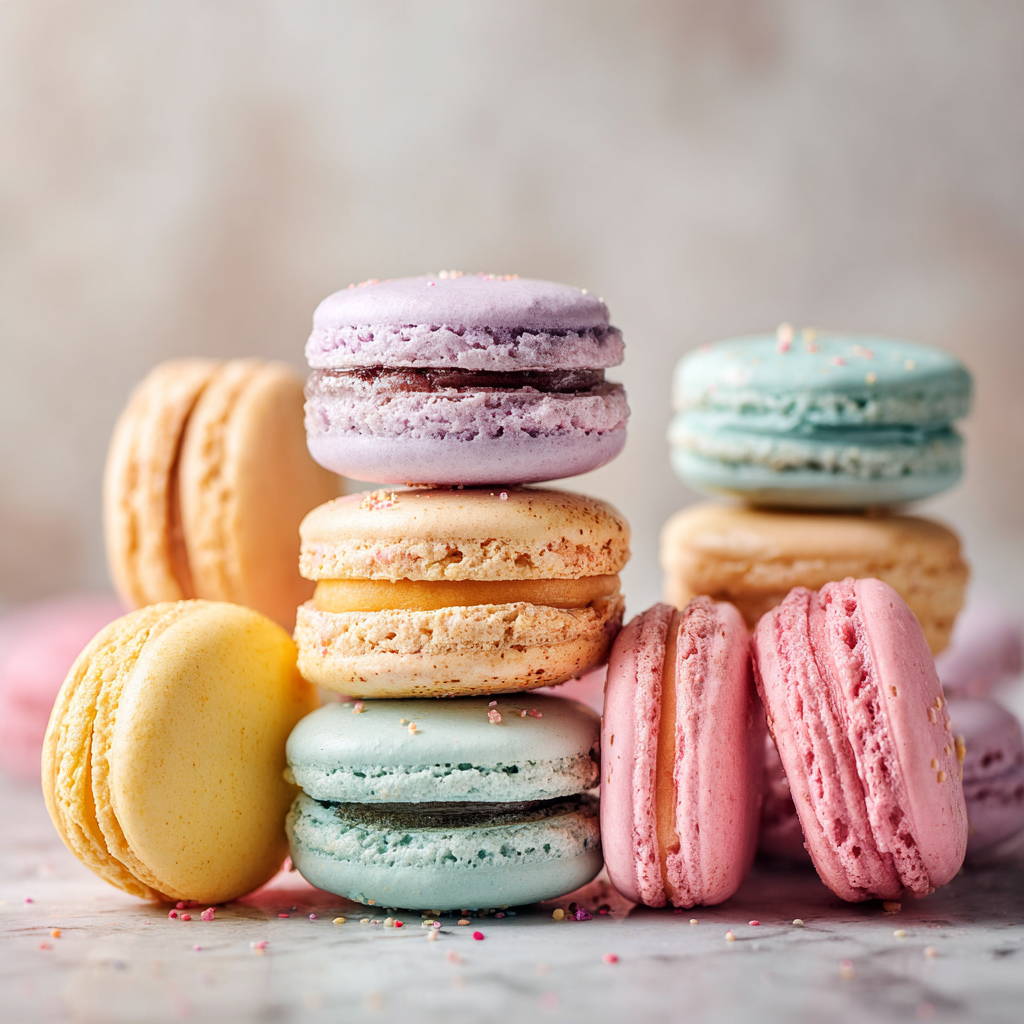
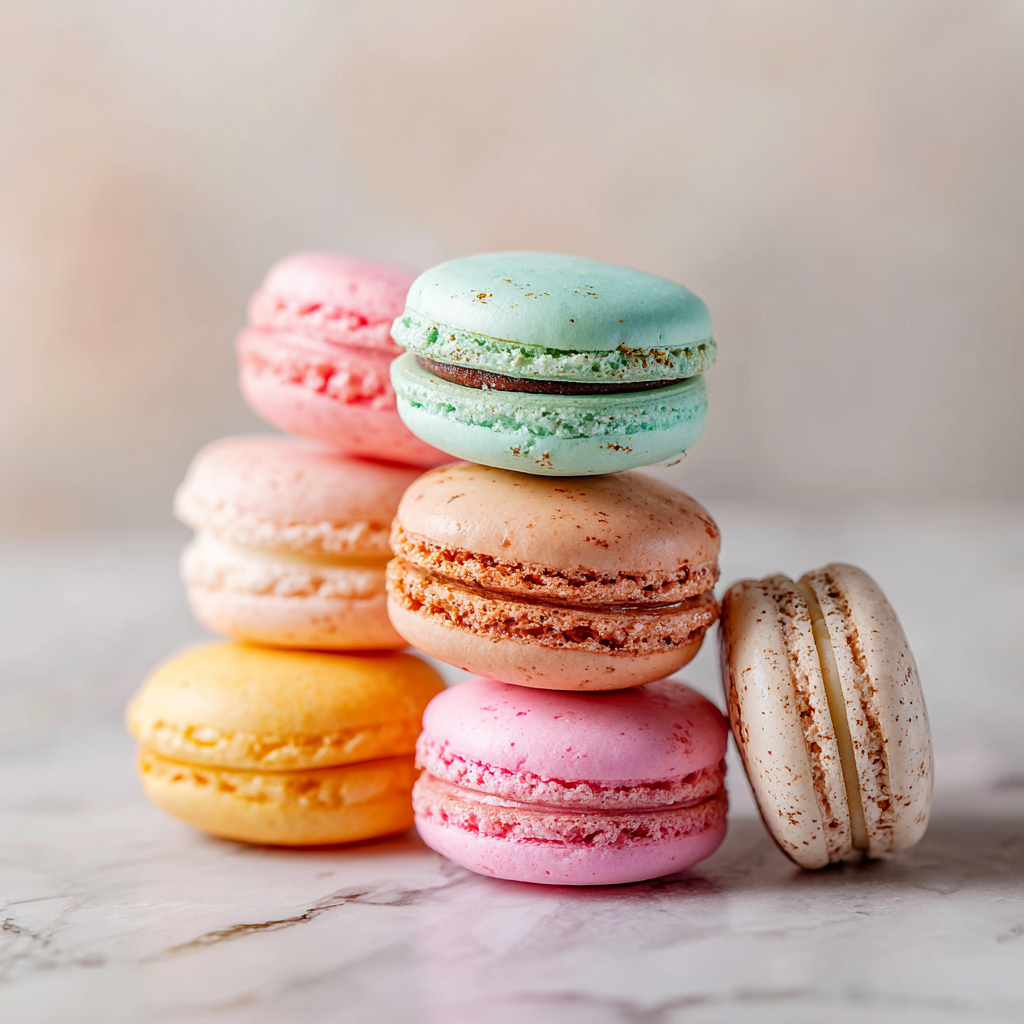
Macarons are French sandwich cookies made with almond flour, egg whites, and sugar. They feature smooth tops and ruffled "feet," then get filled with buttercream, ganache, or jam.
Macaroons, on the other hand, contain shredded coconut and are typically drop-style cookies without filling.
When learning how to make macarons, focus on precision and technique rather than improvisation.
Humidity Matters More Than You Think
Macarons react strongly to moisture in the air. Therefore, dry, cool days typically yield better results.
If you bake on a humid day, the shells may struggle to dry properly before baking. As a result, they can crack or fail to form feet. While you can make macarons year-round, beginners often find success during drier months.
Essential Ingredients for How to Make Macarons
Macarons require surprisingly few ingredients. However, accuracy is everything.
You will need:
- 150 grams sifted super-fine almond flour (measured after sifting)
- 180 grams powdered sugar
- ¼ teaspoon salt
- 120 grams room temperature egg whites
- 60 grams granulated sugar
- 1 teaspoon pure vanilla extract
- Gel or powdered food coloring (optional)
- Filling of choice (buttercream, ganache, jam, etc.)
Because macarons are sensitive, always measure by weight using a kitchen scale. Even a small variation can change the texture.
How to Make Macarons Step-by-Step
Preparing the Dry Ingredients
First, sift almond flour thoroughly. Then measure 150 grams after sifting. This step removes larger almond pieces that can cause bumpy shells.
Next, sift powdered sugar into the almond flour and gently mix. Set aside.
Whipping the Meringue
Wipe your bowl with vinegar to remove any grease. Even tiny traces of oil prevent egg whites from whipping properly.
Beat egg whites and salt until foamy. Then gradually add granulated sugar very slowly. Whip until stiff peaks form. The peak should stand upright without curling.
Do not overwhip. Overwhipped meringue leads to unstable batter and tall, bubbly feet.
Folding and Macaronage
Add vanilla and food coloring.
Then fold in the almond mixture in three additions. Once combined, begin macaronage.
This stage determines success.
Using a spatula, scrape along the bowl and press through the center repeatedly. The batter should flow like thick lava. You should be able to draw a figure 8 that slowly sinks back into the batter after about 20 seconds.
Undermixing results in thick shells. Overmixing causes flat, spread-out macarons. Therefore, stop as soon as the batter reaches proper consistency.
Piping and Resting
Transfer batter to a piping bag.
Pipe straight down at a 90-degree angle. Leave about 1 inch between shells.
Firmly tap baking sheets against the counter several times to remove air bubbles. Use a toothpick to pop any remaining bubbles.
Allow shells to rest 30-60 minutes until a skin forms. When you lightly touch the surface, nothing should stick to your finger.
Baking
Preheat oven to 315°F.
Bake one sheet at a time for 12-15 minutes. The shells should rise and form feet.
Gently press a shell. If it doesn't wobble, it's ready.
Let shells cool completely before removing.
Common Mistakes When Learning How to Make Macarons
Shells Spread Too Much
You likely overmixed during macaronage. Next time, stop mixing slightly earlier.
Hollow Shells
This often comes from undermixing or not tapping trays firmly enough to remove air bubbles.
Cracked Tops
Cracks can occur from trapped air or baking before shells formed a proper skin. Additionally, ovens that run hot can cause cracking.
No Feet
Overmixed batter often results in flat shells without feet.
Filling and Maturing Macarons
Match shells by size.
Pipe filling onto one shell and sandwich gently.
Although you can eat them immediately, macarons taste better after maturing. Refrigerate filled macarons in an airtight container for 24 hours. This softens the interior and enhances flavor.
Store in the refrigerator for up to 2 weeks.
Frequently Asked Questions
Do I really need a scale?
Yes. Precision matters when learning how to make macarons.
Can I use carton egg whites?
No. They rarely whip properly.
Why are my shells bumpy?
You may have used coarse almond flour or skipped sifting.
Can I skip food coloring?
Absolutely. Macarons will have a natural pale cream color.
Can I freeze macarons?
Yes. Freeze filled macarons in an airtight container for up to 3 months.
Conclusion
How to Make Macarons successfully comes down to precision, patience, and practice. Although they have a reputation for being temperamental, following this structured method removes much of the guesswork.
When you weigh ingredients carefully, whip stable meringue, master macaronage, and control oven temperature, you can consistently produce smooth shells with beautiful feet and soft chewy centers.
With each batch, your confidence will grow. Soon, making macarons will feel less intimidating and more like an enjoyable baking ritual.
Leave a Reply